How Much Car Can You Actually Afford? Working Out Your Real Buying Power
By Freddy Niekerk · Published 23 August 2026 · RunYourNumbers
Purchasing power is not the number on the price sticker
When people ask what car they can afford, they usually mean the price tag they can stomach. That is the wrong number to start with. A car's real cost is the instalment, the insurance, the fuel, the maintenance, and the interest paid over however many years you finance it, all added together and measured against what actually lands in your account each month, not what your payslip says you earn.
Your purchasing power for a car is really a function of one thing: your take-home pay after tax, deductions, and every other fixed monthly commitment you already have. Two people earning the same gross salary can have completely different buying power once you account for one person's existing bond and the other's rent-free living situation. Work out your actual net income first, everything else follows from that.
Start with your take-home pay, not your salary
Run your gross salary through a take-home pay calculator before you look at a single car listing. What you earn on paper and what you can spend are rarely the same figure once tax, UIF, retirement contributions, and medical aid are deducted, and the gap between the two is exactly the gap that trips up first-time buyers who budget from their CTC instead of their net pay.
Once you have your real monthly take-home figure, subtract every fixed obligation you already carry: rent or bond, existing debt instalments, insurance, medical aid, and anything else that leaves your account on a fixed schedule regardless of what kind of month you are having. What remains is your actual discretionary capacity, and a car instalment has to fit inside that number, not inside your gross salary.
The five numbers that determine what a car actually costs you
The deposit changes more than your instalment, it changes the total interest you pay over the whole term. A larger deposit means you are financing a smaller amount from day one, which compounds into meaningfully less interest paid by the time the loan ends, on top of reducing your monthly instalment immediately.
The interest rate on vehicle finance in South Africa is typically quoted relative to prime, and even a one or two percentage point difference between lenders adds up substantially over a five-year term. Get quotes from more than one financier rather than accepting whatever rate the dealership's in-house finance desk offers first, since dealers often mark up the rate on the finance itself as a margin.
The term length is where most buyers get the affordability math backwards. Stretching a loan from 48 to 72 months lowers the monthly instalment, which is what a dealer will show you first, but it also means paying interest for two extra years on a depreciating asset. Run both terms through a loan calculator before deciding, the total cost difference is usually larger than it looks from the monthly number alone.
A balloon or residual payment (a lump sum due at the end of the term, common on vehicle finance to lower the monthly instalment) can make an otherwise unaffordable car look affordable for years, until that final payment comes due. If you are not planning to trade in the car for a value that covers the balloon, or refinance it, you need to be saving toward that lump sum separately from month one.
Comprehensive insurance, and the higher premiums that come with a newer or more expensive vehicle, is a monthly cost that is easy to leave out of the affordability sum entirely. Get an insurance quote for the specific make and model before you commit, not an estimate, since premiums vary more between models than most buyers expect.
Worked example: financing R350,000 two different ways
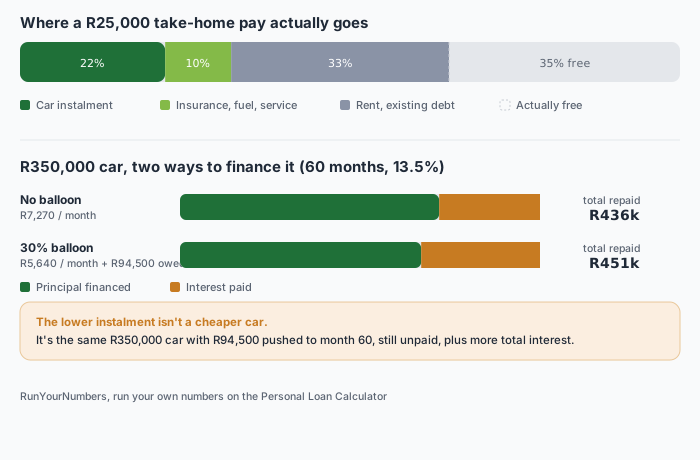
Take a R350,000 vehicle with a R35,000 deposit, financed over 60 months at 13.5%. Using a loan calculator, the monthly instalment lands around R7,270, and the total interest paid over the five years comes to roughly R121,000, on top of the R315,000 financed.
Now add a 30% balloon payment of R94,500 to the same deal, common when buyers want the monthly figure to look smaller. The monthly instalment drops to around R5,640, which feels like meaningfully more room in the budget. But at the end of the 60 months, that R94,500 balloon is still owed in full, and total interest paid over the term is actually higher, around R136,000, because you are financing a larger portion of the principal for the whole period.
The lower monthly instalment is not a cheaper car. It is the same car with the cost rearranged so more of it lands at the end, and if you have not planned for that lump sum, refinancing it at whatever rate is available in five years is not guaranteed to be favourable.
Cash, finance, or somewhere in between
Paying cash avoids interest entirely, which is the cheapest way to buy a car in pure cost terms, but it also means the full purchase price leaves your savings at once instead of being spread over time you could otherwise use that money productively, for an emergency fund top-up or a higher-return investment. Whether that trade-off makes sense depends on what else that lump sum could be doing for you.
Financing with a healthy deposit and the shortest term your budget can comfortably support is usually the middle ground that avoids both extremes, paying too much in interest on one side and depleting your savings entirely on the other. Use a loan calculator to compare the total cost of a few realistic combinations of deposit size and term length before you walk into a dealership, so you are negotiating from a number you chose, not one a salesperson suggested.
Common mistakes when working out car affordability
Budgeting from the maximum the finance house approves you for, rather than from your own calculated affordability, is the most common mistake. Approval is a credit decision based on the lender's risk appetite, not a statement that the instalment is comfortable for your specific budget and goals.
Ignoring running costs is the second. Fuel, insurance, service plans, tyres, and licence renewal add up to a meaningful monthly figure on top of the instalment, often several thousand rand, and a car that looked affordable on the instalment alone can strain a budget once those costs are added in.
Comparing only the monthly instalment between two finance offers, without checking the total cost over the full term, is the third. A longer term or a balloon payment can make a worse deal look better on the one number a dealer knows you are watching. Ask for the total repayment figure on every quote, not just the monthly amount.
Want to see this in action? Try the Personal Loan Calculator.
Keep reading
Frequently asked questions
How do I work out how much car I can afford?
Start with your take-home pay after tax and deductions, subtract your existing fixed monthly commitments (rent or bond, other debt, insurance), and what remains is your real discretionary capacity. A car instalment, plus its insurance and running costs, should comfortably fit inside that number, not inside your gross salary.
Is a longer loan term better because the instalment is lower?
A lower instalment makes a longer term look more affordable month to month, but you pay interest for longer on an asset that is losing value the whole time, so the total cost is usually higher. Run the loan at a few different term lengths through a calculator and compare the total repaid, not just the monthly figure, before deciding.
Should I take a balloon payment to lower my monthly instalment?
A balloon payment lowers your monthly instalment by deferring a lump sum to the end of the term, but that lump sum still has to be paid, refinanced, or covered by a trade-in that happens to be worth enough. If you take one, plan for the final payment from month one rather than assuming a future trade-in will cover it.
Is it better to buy a car with cash or finance it?
Cash avoids interest entirely and is the cheapest option in pure cost terms, but it removes a lump sum from your savings all at once. Financing with a solid deposit and the shortest comfortable term is a reasonable middle ground if paying cash would meaningfully deplete your emergency fund or other savings goals.
What running costs should I add to the monthly instalment when budgeting for a car?
Comprehensive insurance, fuel, a service or maintenance plan, tyres, and annual licence renewal all add up on top of the instalment, often by several thousand rand a month depending on the vehicle. Get a real insurance quote for the specific model before you commit, since premiums vary significantly between similarly priced cars.